


Frequently Asked Questions
Find answers to commonly asked questions below.

Putting bird mesh around your solar panels isn't the end of the story. Mesh sits outdoors, takes the wind and the sun, and gets knocked around in storms. Left alone for years, it can loosen, sag or come away from the panel edge, and birds will find the gap.
This guide is about the after: how to look after your solar panel bird guard, what to check and when, how to spot a breach and when to repair or replace it. It's not complicated, but a few minutes of attention now and then keeps the protection you paid for working.
A barrier is only as good as its weakest point. Wind can work clips loose, heat and UV take their toll on materials over time, and a branch or a ladder can bend a section out of line. Any of those can open a gap under the panels, and a bird needs only a small one.
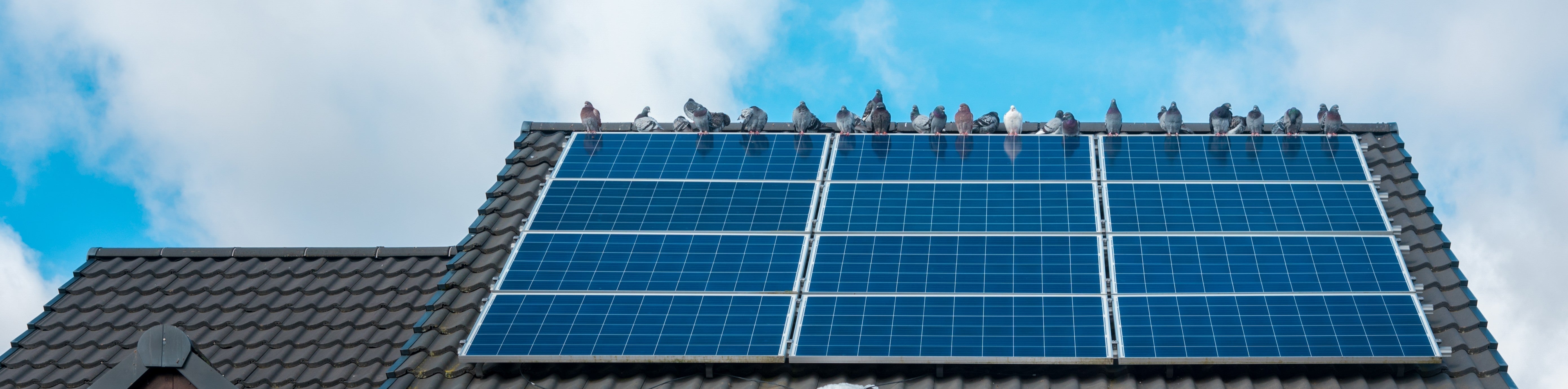
Catching a loose clip early is a five minute fix. Missing it can mean a new nest, and a clean-out. Removing panels just to clean beneath them costs far more than keeping birds out in the first place.
Know the signs that something has got back in:
Pigeons are the usual culprits, but rodents can follow. Rats and possums chew wiring, so a breach in the barrier is worth fixing promptly.
Possums are protected native animals, so the response is exclusion, never removal. In NSW it's illegal to relocate or kill one, or to trap and release one, without a licence, and the state's advice is to block entry points only when you're sure the possum has left the roof to forage. Never seal an animal in. If you think one is already under the panels, contact a wildlife professional.
Australian conditions are part of why maintenance matters. Strong summer sun, storms and, near the coast, salt air all age materials. Mesh that holds its shape and coating well will need less attention, but nothing is maintenance free.
There isn't a rule that fits every roof, so treat the following as sensible habits rather than a schedule from a manual. After strong winds and storms is the obvious time. Beyond that, a couple of checks a year is a reasonable habit, and more often if you have trees overhead or a history of nesting.

You can do most of this from the ground with binoculars. If something looks wrong, get closer only if you can do it safely. Safe Work Australia says falls from height are the major cause of death and injury in roof work and advises treating every roof as fragile until a competent person confirms otherwise.
Panels need cleaning now and then, and bird proofing makes that easier because there's less to clear. Follow your panel manufacturer's guidance, and keep these points in mind:

Coordinate with your regular solar service or clean where you can. It's a good moment to have a professional glance at the mesh, if they're up there anyway.
Small problems usually have small fixes. A loose clip can be replaced, a gap at a corner can be patched with off-cut mesh and cable ties, and an overlap that's come apart can be re-clipped and re-tied, the way it was done on the day it went in.
Keep a few spares if you can. Solar mesh clips are sold separately, and solar mesh is sold by the roll if you need to replace a damaged section. At the time of writing, galvanised steel is $1.75 per metre and stainless steel 304 is $3.10 per metre, but check the live prices.
If you add panels later, you'll need to extend the barrier to match. Measure the new edges, add a little for corners and joins, and join the new mesh to the old using the overlap method.
Replace rather than repair when a section is badly bent, corroded or no longer holds tight. Mesh that has lost its coating or its shape isn't protecting you any more.
Birds that can't reach the panels often try the next sheltered spot, and the gutters are close by. Pigeons, sparrows and starlings nest in gutters and roof cavities, and nesting material blocks gutters. Standing water in a blocked gutter is also where mosquitoes breed.
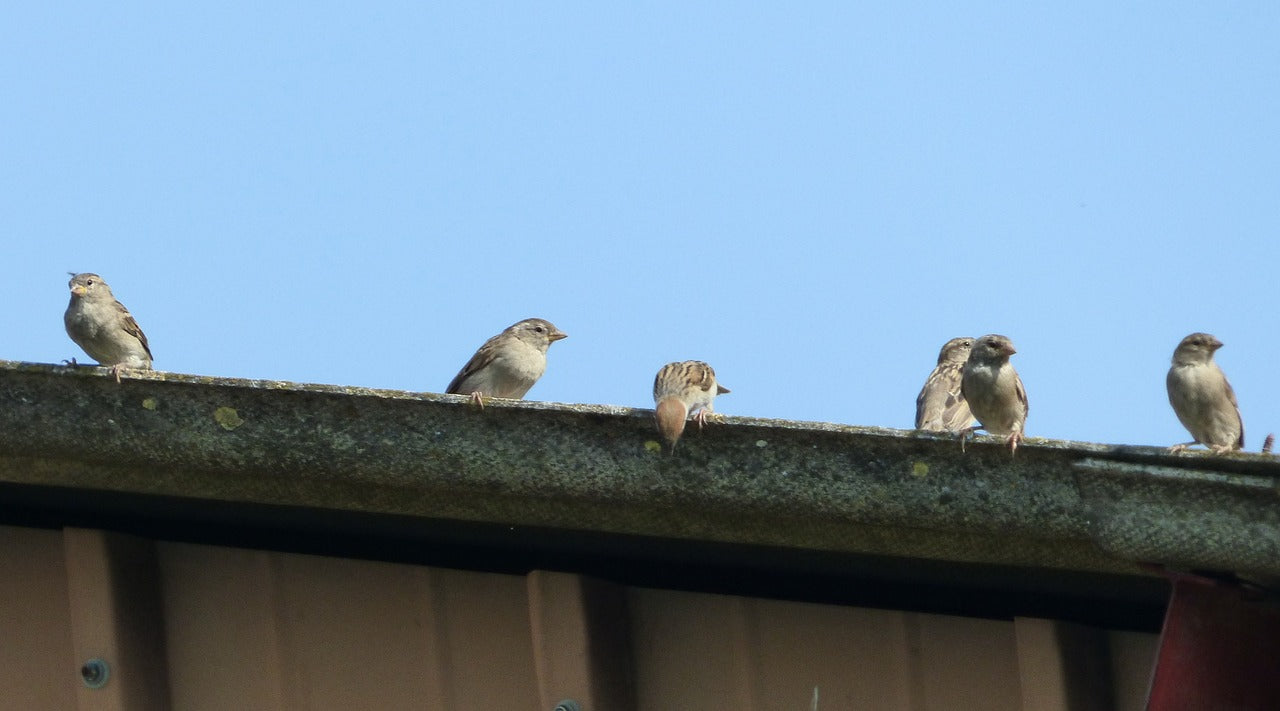
While you're checking the mesh, glance at the gutters. A bird proof gutter guard handles that side, regular gutter guard maintenance keeps it working, and a blocked gutter is what you get if you leave it.
Get help if there's an active nest or an animal under the panels, if panels or wiring look damaged, if the roof is steep, tiled or double storey, or if the access isn't safe. Call a wildlife professional if you suspect a possum. For electrical concerns, a qualified person is the only right answer.
If you need replacement mesh or clips, have a look at the Solar Mesh Kit or call us on 1300 032 760.
You don't need a long list. A walk-around does most of the work.
Five minutes is plenty. Write down the date if you like keeping records, because it makes patterns easier to spot, like a gap that keeps reopening in the same corner.
Storms are the most likely time for damage. Strong gusts can lift a loose edge or push in a section. Once it's safe, take the same ground-level look. If a section has moved, plan the repair for a calm, dry day, and don't climb up during or straight after bad weather.
Overhanging branches are worth a thought too. If a limb is rubbing the mesh or dropping debris onto it, trimming it back (using a qualified arborist where it's large) removes the cause.
If you rent out the property or manage it for someone else, pass this checklist on. The person living there will notice a noise or a mess long before anyone climbs a ladder.
Treat the mesh like any other part of the house exterior. It doesn't ask for much, but it does ask to be looked at occasionally, and a quick look is far cheaper than a nest clean-out.
If a repair means refitting a section, the method is the same as the original fit. And if birds keep coming back, it's worth understanding why they nest under panels in the first place.
Mesh: Your corrugated roof Colorbond gutter guard kit comes with our durable Aluminium Gutter Guard Mesh. All kits are delivered in a gutter guard ...
View full detailsMesh: Your valley gutter guard kit for corrugated valleys comes with our durable aluminium mesh. It is delivered in roll form for easier installati...
View full detailsMesh: Your gutter guard for tiled roofs comes with our durable Aluminium Leaf Guard Mesh. It is delivered as a leaf guard mesh roll for easier inst...
View full detailsMesh: Your tiled roof valley guard kit for tiled roofs comes with our durable Aluminium Leaf Guard Mesh. Valley guard for tiled roofs is delivered ...
View full detailsMesh: Your Trimdek gutter guard kit comes with our durable Aluminium Gutter Mesh. All kits are delivered in a DIY gutter guard mesh roll for easier...
View full detailsFind answers to commonly asked questions below.