


Frequently Asked Questions
Find answers to commonly asked questions below.

Can you bird proof solar panels yourself? Often, yes. The materials are simple, and fitting mesh around an array is the kind of job a handy homeowner can do. The real questions have less to do with skill and more to do with your roof, the size of your array and how comfortable you are working at heights.
This guide helps you work out which side of the line you're on. It covers what a DIY job involves, who it suits, what the safety limits are, and what to look for if you decide to hire someone instead.
For a lot of homes, the answer is yes. A DIY kit includes the mesh, the clips and the cable ties, so parts aren't the hurdle. Access is. If you can reach the edges of the array safely and there's no active nest in the way, DIY is realistic.
If the answer to any of the questions below is no, treat that as a sign to get a quote:

| Factor | DIY mesh kit | Professional install |
|---|---|---|
| Best suited to | Low single storey roofs, reachable array edges, moderate perimeters | Double storey, steep or tiled roofs and large arrays |
| Roof access and safety | Your own risk, ladders and heights | Handled by the installer |
| Nest and wildlife handling | Check first, and call for help if a nest is active | Wildlife-aware professional handles it |
| Pest exclusion when done properly | Gap closed with mesh | Gap closed with mesh |
| Guarantee | Product terms (check the solar mesh warranty) | Installer's terms, in writing |
Notice the pest row. Done properly, DIY and professional fitting give you the same result: a closed gap. The difference is who carries the risk of getting there. We've left prices out of this comparison because they deserve their own guide. Our article on what pigeon proofing costs goes through the figures.
At a high level, the job runs like this:

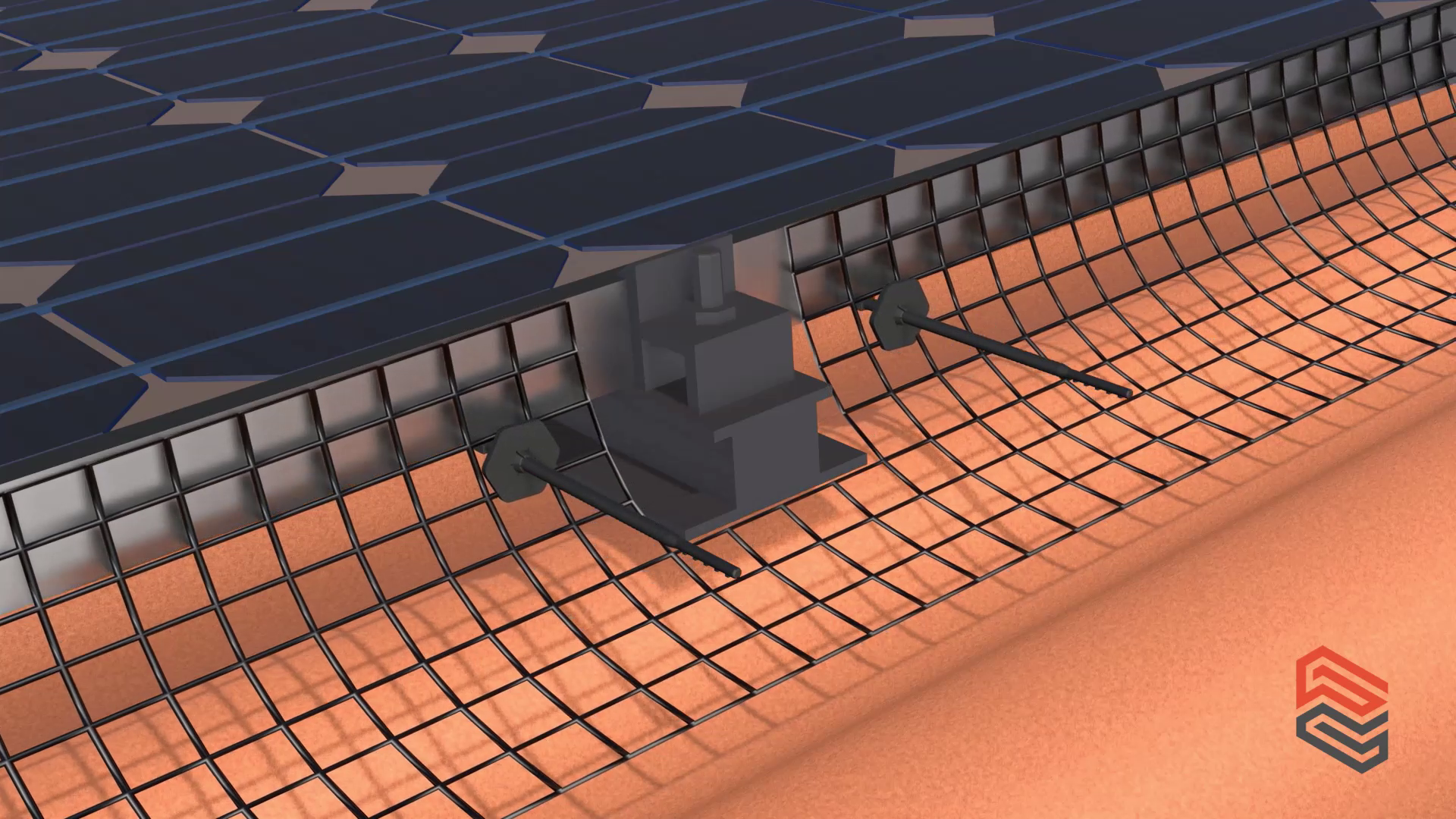
A 30 metre Solar Mesh Kit includes 200mm wide mesh, 100 nylon clips and washers and 20 cable ties. The clips go through the mesh to the panel lip, so it's a job many homeowners can do themselves on a safe roof.
We haven't put a time on it because it depends on the perimeter, the number of corners and mounts, and how easy the roof is to access. Allow longer than the straight runs suggest, and don't rush on a roof.
DIY saves you labour. You're buying mesh and clips instead of paying for someone's time, and you choose when to do it. That's a real saving, and for many households it's the main reason to have a go.
What it doesn't save you is the risk. The roof is just as high when you're the one on it, and there's no one else to take responsibility for the nest check, the clean-out or the finished fit. You're also the one who has to notice a gap, because there's no installer to come back and fix it.
A few slip-ups are worth planning around from the start:
Check for activity before you do anything else. If there are eggs, chicks or an animal under the panels, stop. Some birds are protected, and so are their nests in some circumstances. Your state wildlife authority or a licensed pest controller can advise.
Possums are a protected native species. In NSW, it's illegal to relocate or kill a possum, or trap and release one without a licence, and the advice is to block entry points only when you're sure the possum has left to forage. If you think there's a possum, that's a job for a wildlife professional, not a mesh kit. Never seal an animal in.
Rodents often follow birds, and rats and possums chew wiring. A complete perimeter matters because a small gap is all they need. Mesh closes the gap under the panels, but it doesn't make the whole roof pest proof.
Safe Work Australia says falls from height are the major cause of death and injury in roof work, and that every roof should be treated as fragile until a competent person says otherwise. Wind, rain and heat all add to the risk.
If you're not completely comfortable, that's your answer. A quote costs nothing.
Plenty of people do, particularly on steep, tiled or double storey roofs and larger arrays. Whether you're in Sydney, Melbourne or anywhere else in the country, the approach is the same.

A professional job normally covers an inspection, nest handling by someone who knows the wildlife rules, a clean-out, fitting the mesh and a final check. When you get quotes, look for:
Ask how the mesh is fixed. Some methods rely on drilling the panel frame, which can raise warranty questions. If one installer won't fit mesh, a gutter guard company might, with any electrical work still done by a qualified person.
It isn't all or nothing. If the mess under the array is the part putting you off, you can ask a professional to deal with an established nest and clean the space, then fit the mesh yourself. A combined clean-and-mesh job is a standard service for many providers, so it's worth asking a provider whether they'll quote for the clean-out on its own. Whoever does it should wear gloves, goggles and a mask, as council guidance on feral pigeons recommends for handling droppings.

The reverse works too. Do the cleaning and measuring yourself and have someone else handle the roof work on the awkward edges. Be clear about the split when you get quotes, so everyone knows who's responsible for what.
Here's a quick way to decide. If the roof is low, the array is small to medium, there's no nest and you're comfortable up a ladder, DIY is a reasonable option. If any of those aren't true, get quotes.
Want to see what a DIY job involves in terms of parts? Check out the Solar Mesh Kit, or call us on 1300 032 760 and we'll talk it through.
If you've decided to go ahead yourself, the job is clip, overlap and tie, repeated around the array, and the cost is easy to work out from your perimeter. Not sure mesh is the right method? It's worth comparing it with netting and spikes first.
Mesh: Your corrugated roof Colorbond gutter guard kit comes with our durable Aluminium Gutter Guard Mesh. All kits are delivered in a gutter guard ...
View full detailsMesh: Your valley gutter guard kit for corrugated valleys comes with our durable aluminium mesh. It is delivered in roll form for easier installati...
View full detailsMesh: Your gutter guard for tiled roofs comes with our durable Aluminium Leaf Guard Mesh. It is delivered as a leaf guard mesh roll for easier inst...
View full detailsMesh: Your tiled roof valley guard kit for tiled roofs comes with our durable Aluminium Leaf Guard Mesh. Valley guard for tiled roofs is delivered ...
View full detailsMesh: Your Trimdek gutter guard kit comes with our durable Aluminium Gutter Mesh. All kits are delivered in a DIY gutter guard mesh roll for easier...
View full detailsFind answers to commonly asked questions below.