


Frequently Asked Questions
Find answers to commonly asked questions below.

Search for bird mesh for solar panels and you'll find rolls of wire in every width and price, from hardware aisles to specialist suppliers. They can look much alike on a screen. They aren't.
The mesh has to keep birds out for years, cope with Australian sun, wind and (near the coast) salt, and stay fixed to your panels without causing other problems. This guide covers what to check before you buy: materials, coatings, opening size and clips. We'll also show how our own solar mesh stacks up on those points, so you can judge it the same way.
A product that does the first part but falls apart in a couple of summers isn't a bargain.
Pigeons are the main reason people buy solar mesh, but the gap under your panels attracts other animals too. Rodents can follow birds in, and rats and possums chew wiring, and droppings are corrosive, which is why councils recommend protective gear for handling them.
That's one of the arguments for metal over plastic. A coated steel or stainless steel mesh is a tougher barrier for gnawing animals than a lightweight plastic net. It's also why the mesh has to be fixed properly: a barrier with a loose edge is an invitation.
Possums are protected natives. In NSW, for example, it's illegal to relocate or kill one, or trap and release one, without a licence, so the answer is exclusion at the entry point, sealed only once the possum has left to forage. Never seal an animal in.
A caveat on opening size, which we'll come back to: half inch openings are sized for birds. Mesh closes the gap under the panels, but we wouldn't promise it keeps out every small animal, and it doesn't make the whole roof pest proof.
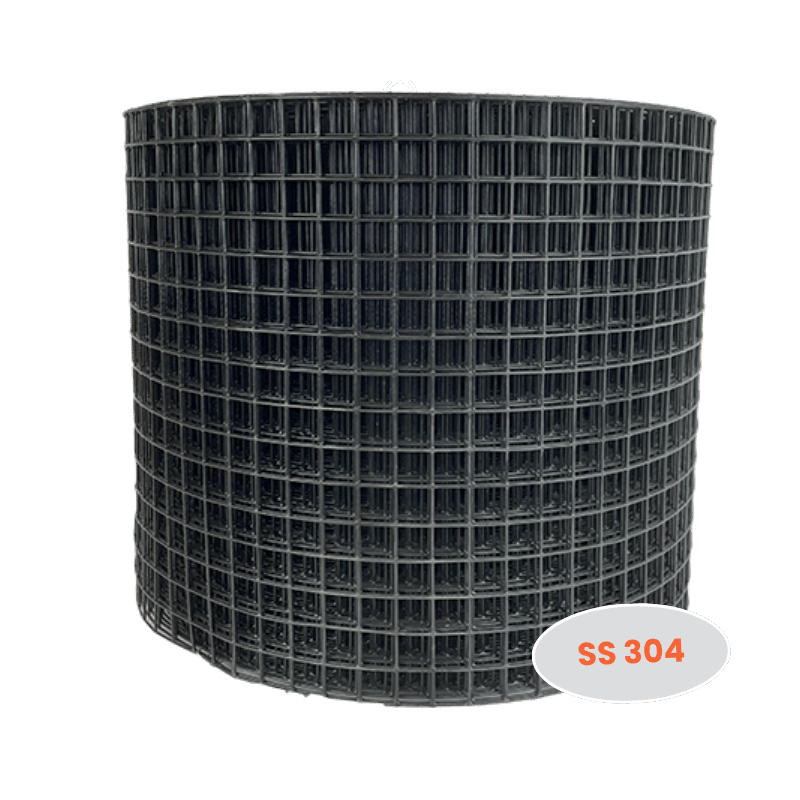
| Factor | Galvanised steel (PVC coated) | Stainless steel 304 | Plastic or PVC netting |
|---|---|---|---|
| Pest exclusion (birds and rodents) | High, as a metal barrier | High, as a metal barrier | Lower, can be chewed or torn |
| Weather and UV | Depends on the coating | Strong corrosion resistance | Varies, can degrade in UV |
| Coastal suitability | Check the coating | Better suited | Check the material |
| Shape retention | Holds its shape | Holds its shape | Can sag if not kept tight |
| Relative cost | Lower | Higher | Lower |
The table is general guidance, not a test result, and individual products vary. Use it as a list of questions to ask. Our solar mesh comes in both steel options. The price gap is easy to see on the solar mesh collection: galvanised steel Q195 at $1.75 per metre and stainless steel 304 with a black PVC coating at $3.10 per metre at the time of writing.
The opening is the gap in the mesh. Make it too big and birds squeeze through. Make it too small and you may trap more debris or restrict airflow.

Our solar mesh has half inch by half inch (about 12.7mm) openings. That's sized to stop pigeons and other birds from getting through. Smaller creatures are a different matter. A barrier that removes the sheltered nesting spot deters a lot of animals, but we wouldn't claim it stops mites or very small rodents. That's why we describe it as bird proofing, not pest proofing.
Width matters too. Our mesh is 200mm wide, which is meant to span the gap under the panel edge. Whatever you buy, make sure the width suits the height of the gap on your roof and that there's enough to fold at corners and mounts.
A good mesh with a poor fixing is still a poor job. Some methods screw or rivet the mesh to the panel frame. Some panels have no bottom flange, so drilling can be needed, and you should check the panel warranty first.
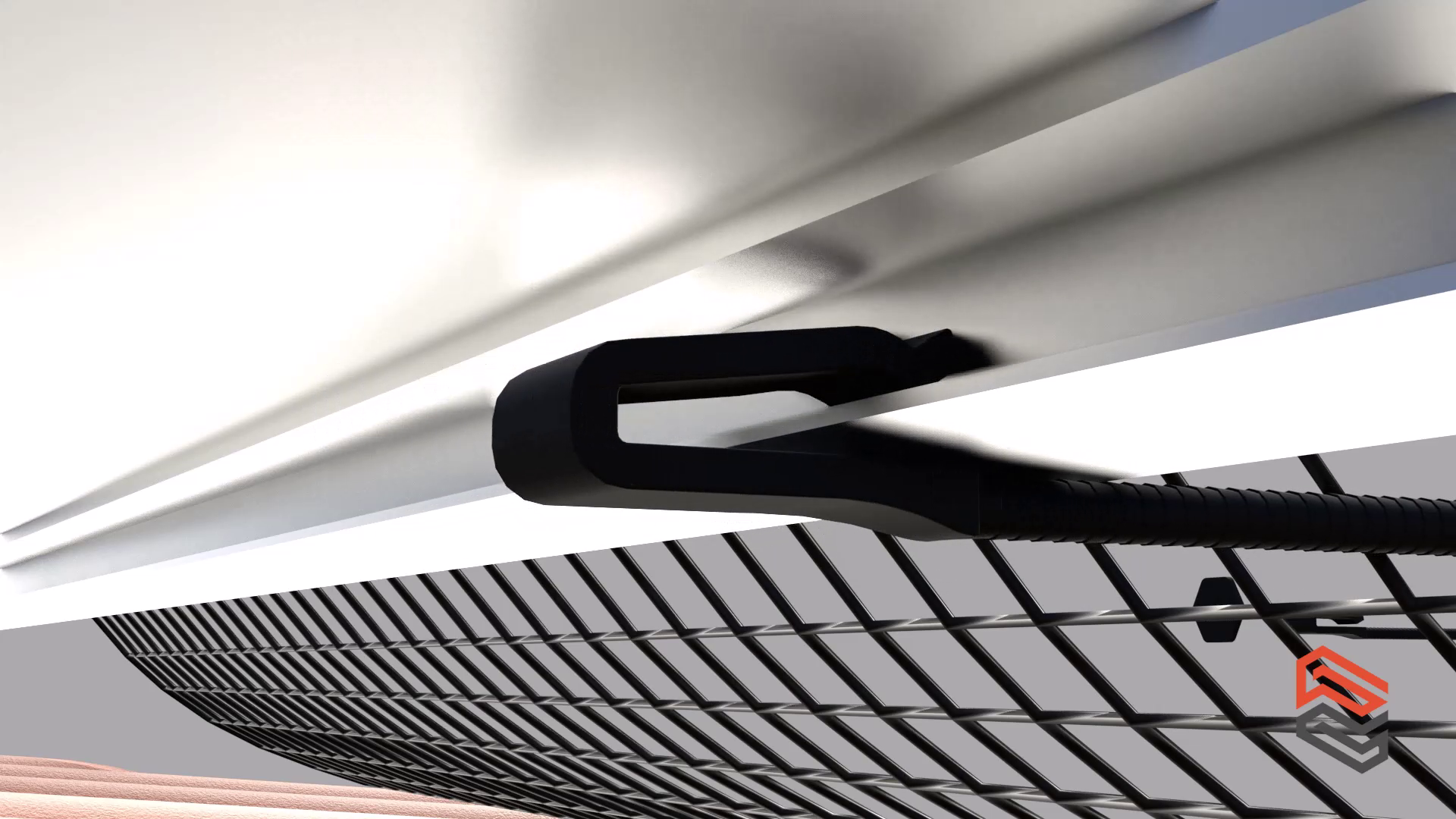
Our kits use nylon clips and washers (Nylon 66 with GF 30) that go through the mesh and secure against the inside lip of the panel. You can choose aluminium clips as an alternative. The washer pulls the mesh tight against the side of the panel. If your frame has no lip to clip to, speak to your panel manufacturer or installer before you improvise. And treat the roof with respect: Safe Work Australia advises treating every roof as fragile. Extra clips are in the solar mesh clips collection.
If you've been comparing a specialist mesh with what's on the shelf at a hardware store such as Bunnings, the questions are exactly the same. Whatever the product, ask for the details and check them against this list. If a listing can't tell you the material, coating and opening size, keep looking.
For us, the details are: a 0.7mm Q195 carbon steel core, electro-galvanised and PVC coated, finishing at 1.0mm, in a roll 200mm wide and 30 metres long. Each kit has 100 nylon clips and washers and 20 cable ties. A warranty document is available with the Solar Mesh Kit, so you can read the terms before you buy.
A kit bundles the mesh, clips and ties, so you aren't hunting for matching parts. At the time of writing, the 30 metre kit is $98 (regular price $124.10), which is about $3.30 per metre. Buying by the metre makes sense for repairs, extra coverage or a custom job. Mesh alone doesn't include clips, so add those to your total.
Prices change, so check the live pages. If you'd like to see the arithmetic, the cost of pigeon proofing works through an example.
It comes down to your conditions and your budget.
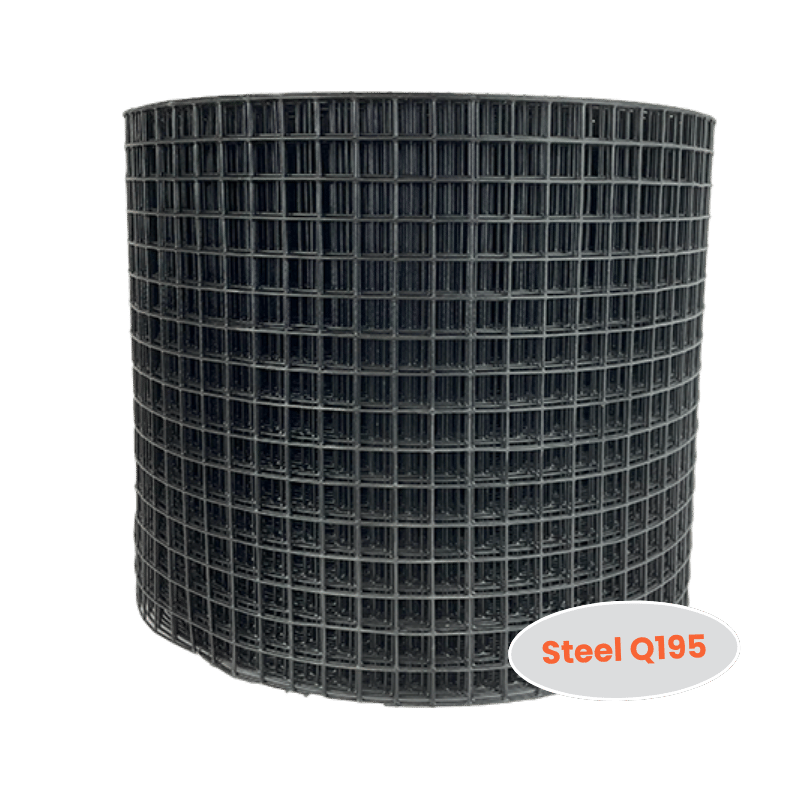
The materials are woven the same and the opening size is the same, so the choice is about the metal itself, not a different grade of product.
Mesh runs along the edge of the array where everyone can see it, so looks matter to a lot of people. Black and dark grey tend to blend into panel frames and shadow lines, while bare metal can stand out. Our stainless steel 304 mesh has a black PVC coating, which is one reason some people choose it for visible arrays.
Fit makes more difference to appearance than colour. A straight, tight run looks tidy. A wavy, sagging one looks like a patch job, whatever it's made of.
Measure the perimeter of the array, add a little for corners, joins and overlaps, and then pick the product. Plan the runs from the ground so you bird proof the array in one go, and work out the cost from your total length.
If you only remember one thing from this list, make it the first one. A cheap roll that runs short halfway along the array costs you more than the saving, and matching mesh from a different batch later rarely looks right.
When the mesh arrives, take your time fitting it. If you're still weighing mesh against netting, compare the methods first.
Mesh: Your corrugated roof Colorbond gutter guard kit comes with our durable Aluminium Gutter Guard Mesh. All kits are delivered in a gutter guard ...
View full detailsMesh: Your valley gutter guard kit for corrugated valleys comes with our durable aluminium mesh. It is delivered in roll form for easier installati...
View full detailsMesh: Your gutter guard for tiled roofs comes with our durable Aluminium Leaf Guard Mesh. It is delivered as a leaf guard mesh roll for easier inst...
View full detailsMesh: Your tiled roof valley guard kit for tiled roofs comes with our durable Aluminium Leaf Guard Mesh. Valley guard for tiled roofs is delivered ...
View full detailsMesh: Your Trimdek gutter guard kit comes with our durable Aluminium Gutter Mesh. All kits are delivered in a DIY gutter guard mesh roll for easier...
View full detailsFind answers to commonly asked questions below.